The implementation of the “Electronic Prescription” system in Tashkent and 15 pilot districts will be carried out in stages and will be the focus of attention of both citizens and the professional medical community, the press service of the Ministry of Health reports.
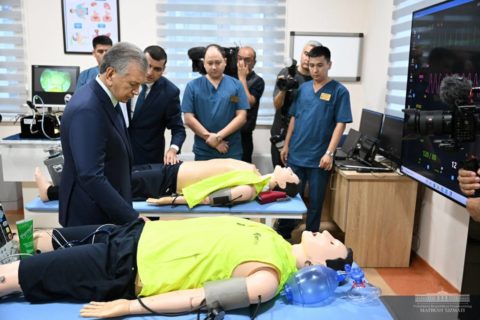
A working meeting was held at the Ministry with the participation of leading doctors of state and private medical organizations, representatives of relevant structures, and experts. They discussed the implementation of the “Electronic Prescription” system, as well as proposals for improving individual procedures, taking into account the real experience of medical workers and the needs of patients.
A decision was made to establish an Expert Council under the Ministry of Health for continuous professional dialogue. Its open sessions will be held regularly, every Friday, with the participation of representatives of the medical community, the pharmaceutical sector, and other interested specialists.
Within the framework of the meeting, the existing mechanisms of the “Electronic Prescription” system were also explained. It is reported that the connection of private medical organizations and doctors to the corresponding module is free of charge. Connection is provided by contacting the support service at +998 (71) 202-50-00.
Special attention was paid to the issues of medical practice — prescribing prescriptions, including electronic ones, falls exclusively under the doctor’s competence. For continuous treatment, in the absence of a drug in a specific medical organization, the doctor prescribes a prescription, and the registration and entry of information into the system is carried out by the pharmacist of the pharmacy.
When a citizen applies to a pharmacy, the medication is dispensed by the pharmacist based on an electronic prescription, a document with a QR code, or a PINI. For foreign citizens, the possibility of registering in state medical institutions for the purpose of obtaining an electronic prescription on general terms is provided.
To support the population, a round-the-clock call center operates at the 1003 short number, through which citizens can receive consultations and explanations on all issues related to the “Electronic Prescription” system. Bedridden patients, as well as those with chronic diseases, can seek advice and a prescription from their family doctor.
In the absence of family doctor contacts, assistance is organized through the call center. The order of the Minister of Health has been adopted, which consolidates the existing mechanisms and determines the phased implementation of the “Electronic Prescription” system, taking into account the proposals of specialists and feedback, providing for:
- phased implementation of the “Electronic Prescription” system in the territory of the city of Tashkent and 15 pilot districts (cities) with the registration of electronic prescriptions for the international non-patented name of medicines and the entry of all prescriptions directly by the doctor into the electronic system;
- free connection of medical and pharmaceutical organizations to the DMED information system, as well as integration of their existing information systems with the digital platform of the Ministry of Health, provided that the necessary technical conditions are met;
- phased formation of prescription lists of medicines transferred to electronic prescription, with the approval of separate lists at each stage and their preparation by the Expert Council, taking into account the medical significance, social risks, and practical needs of the healthcare system;
- determination of the first stage of implementation, within the framework of which an electronic prescription is mandatory for antibiotics, synthetic antibacterial drugs, and systemic hormonal drugs;
- consolidation of the doctor’s authority to prescribe electronic prescriptions, including the possibility of prescribing medicines that are absent in a specific medical organization, with subsequent entry of information into the system by pharmacists of pharmacies;
- establishing the procedure for dispensing prescription drugs in pharmacies based on an electronic prescription, including the use of the patient’s PINI, as well as maintaining the possibility of issuing paper prescriptions in exceptional cases during the transition period and in emergency situations;
- Determination of a mechanism under which, if the patient or their representative does not have an electronic prescription, the pharmacy pharmacist has the right, on the basis of an identity document (including in paper or electronic form), to enter the PINI and familiarize themselves with the electronic prescription through the system with subsequent dispensing of the prescribed medicinal product;
- ensuring the rights of citizens, including foreign citizens, to receive medical care and medicines, including in emergency cases, as well as informing the population about the stages of implementation of the system and the lists of medicines through official sources.
The document also provides for the organization of constant explanatory work and feedback, including the operation of the round-the-clock call center 1003, through which:
- the appeal of bedridden patients suffering from chronic diseases to their family doctor;
- obtaining an electronic prescription by contacting a family doctor remotely (in certain cases — a specialized specialist);
- organization of patronage and provision of necessary medical services at home, if there are indications.
The order also provides for the establishment of a special procedure for prescribing prescriptions for patients with chronic diseases, providing for the possibility of prescribing:
- up to 60 days of treatment – for medications prescribed for the treatment of chronic diseases, coded in accordance with the International Classification of Diseases (ICD), and medications with pronounced anabolic activity;
- up to 90 days of treatment — for other prepared medicines (within the framework of reimbursement — up to 30 days) by decision of the treating physician.
In these cases, the validity period of the electronic prescription and the corresponding QR code is extended for the period of the prescribed treatment course.
The “Electronic Prescription” system is aimed at improving the safety of treatment, increasing responsibility for prescribing medications, and streamlining drug circulation. All changes are being implemented in stages with constant monitoring of practice and feedback from citizens and medical workers, — the report said.
Earlier, it was reported that the Ministry of Health would study the reaction of residents and medical workers to the new system of medicine sales. After discussing complaints, questions, and suggestions, the specialists will publish all the explanations.