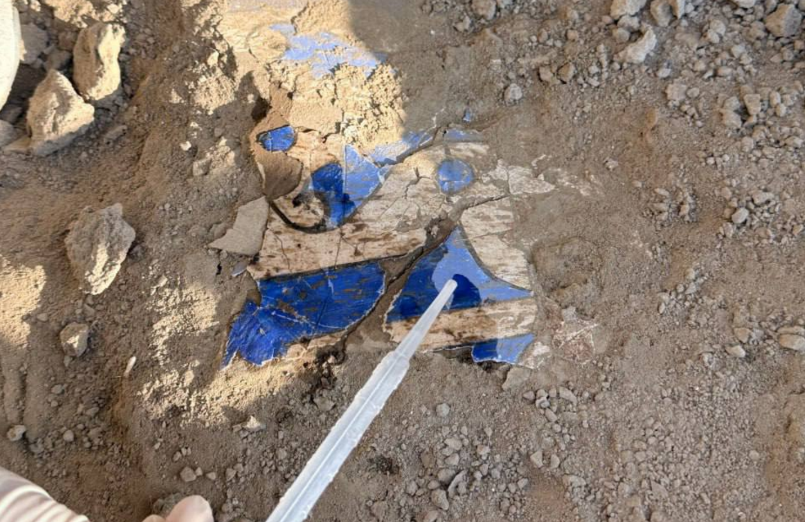
During archaeological excavations in the Tashkent region, specialists discovered frescoes dating back to the 10th-11th centuries.
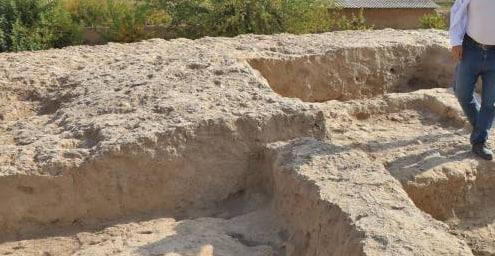
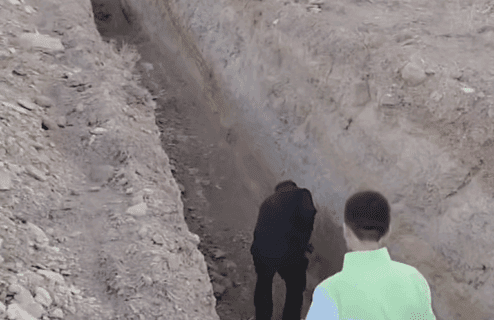
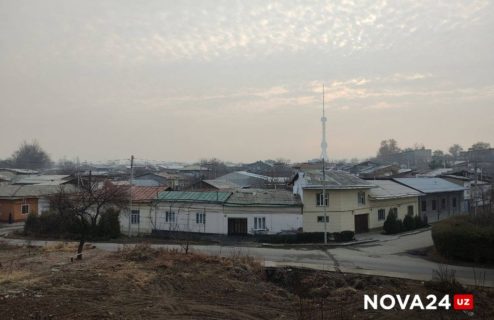
The frescoes were found on the territory of a large caravanserai located in the Kanka settlement. The caravanserai is located about 60 meters from the southern gate of the ancient city, its total dimensions are about 100×70 meters. The fragments of frescoes fallen off the walls of the rooms have dimensions of 25×30, 15×20, and 30×35 centimeters.
The finds indicate that the art of wall painting, which temporarily disappeared after the Arab conquest, was revived in the Tashkent region in the 10th-11th centuries. According to archaeological data, similar paintings were also found on the monuments of Samarkand and Akhsikent.
These paintings, which are being studied with the participation of restorers from the Samarkand Institute of Archaeology of the Cultural Heritage Agency, indicate the existence of a wall painting school in Tashkent as well. During the archaeological research conducted at the monument in 2023, paintings from the V-VII centuries were recorded, — the Academy of Sciences noted.
The finds at Kanka, according to scientists, are important not only for understanding the cultural life and development of the wall painting of the region, but also for studying the medieval history of the region. Currently, the Institute of History of the Academy of Sciences and the Tashkent region administration are conducting research to turn the Kank monument into an open-air museum.
As a reminder, fossilized dinosaur remains were found in Karakalpakstan. According to preliminary data from archaeologists, the discovered ancient animal lived approximately 75 million years ago.