Uzbekistan is confidently moving towards the construction of the first nuclear power plant in Central Asia. The republic has already begun construction of the first facilities for the first low-power station in the Jizzakh region, and is also considering the conditions for the possible construction of a nuclear power plant with two VVER-1000 power units with the prospect of expanding to four power units. A NOVA24 correspondent observed the operation of the Kalinin Nuclear Power Plant with four VVER-1000 power units, and also learned why one shouldn’t be skeptical about RITM-200N reactors for AMM.
VVER-100 and Kalinin NPP reactors
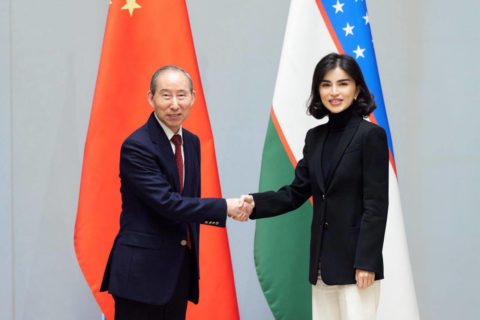
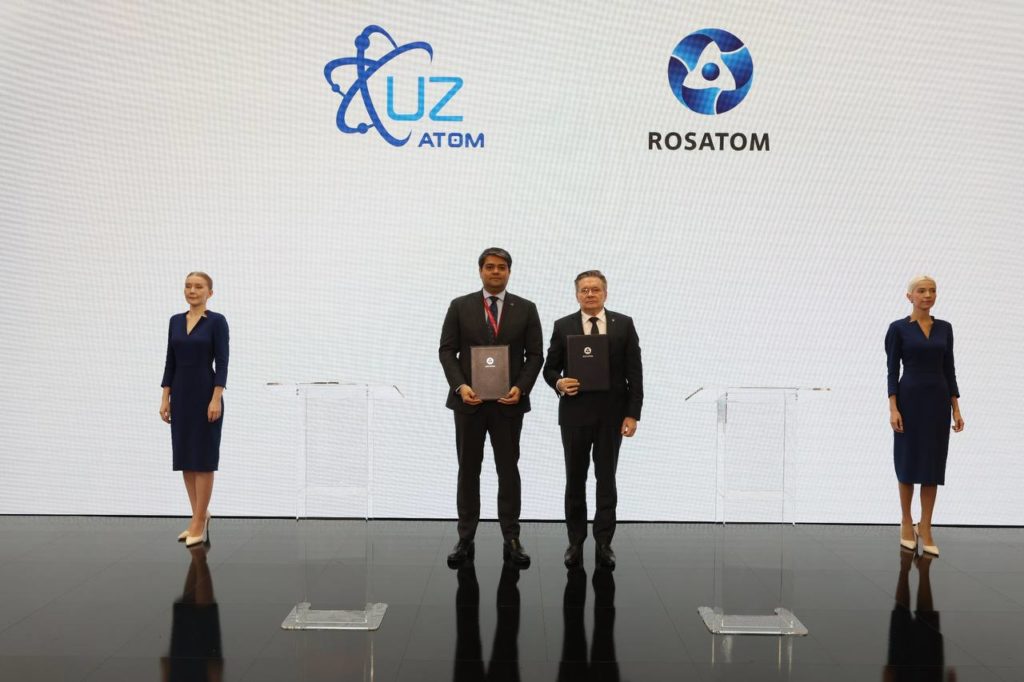
On June 20, 2025, within the framework of the St. Petersburg International Economic Forum, Uzatom and Rosatom agreed to study solutions for the construction of a large-capacity nuclear power plant, which should be a logical continuation of the ASMM (Low-Power Nuclear Power Plant) construction. The document provides for the main conditions for the possible implementation of the construction of two VVER-1000 power units (see note: Water-Water Power Reactor) with a prospective expansion to four power units.
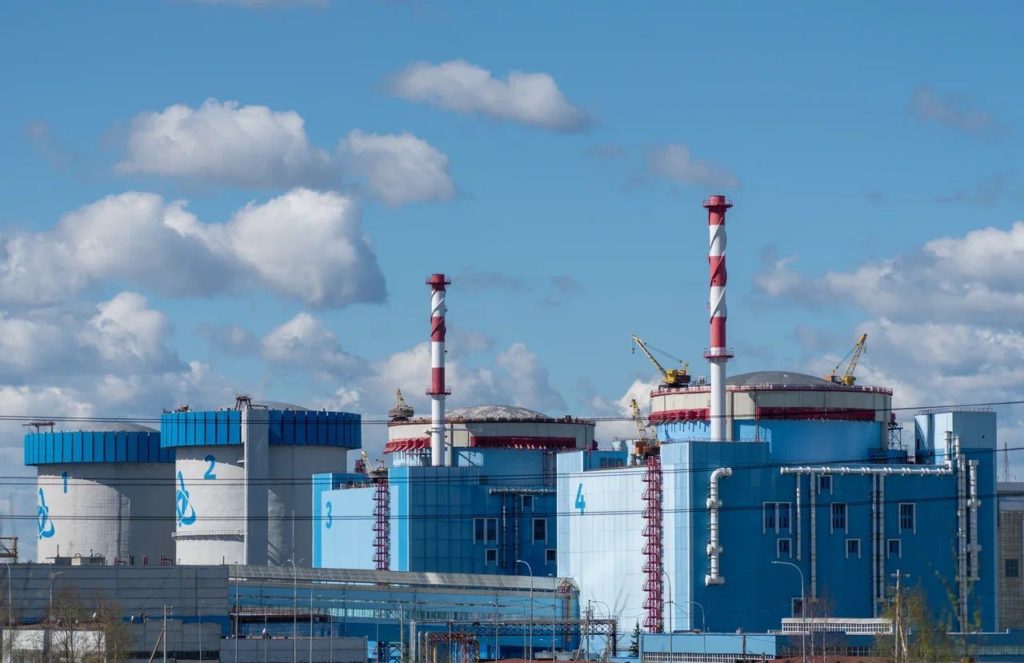
Currently, the VVER-1000 reactors are leading in safety, power, and economic efficiency. The installations demonstrate excellent performance — more than 1000 reactor-flights of service without a single accident.
In Russia, the plant’s layout with a pair of power units is presented at the Kalinin Nuclear Power Plant. The station, commissioned in 1984, produces over 4,000 MW of energy. The power output indicator places the station among the largest electricity producers in the Central part of Russia: about 80% of the Tver region with a population of 1.19 million people is provided with electricity thanks to the nuclear power plant.
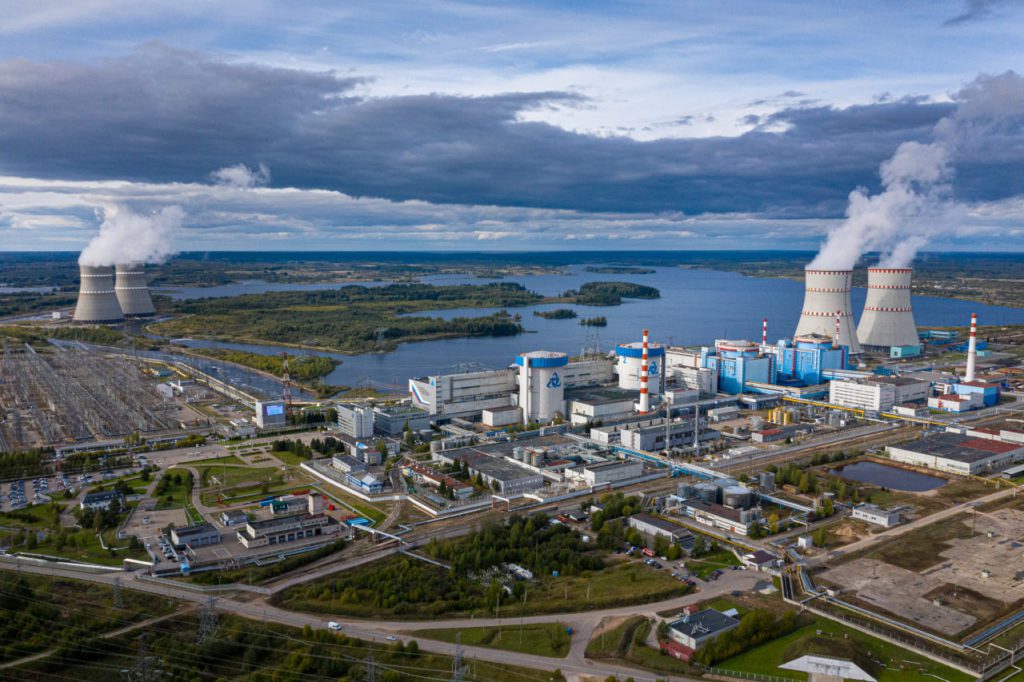
Станция состоит из двух очередей: первые два энергоблока были построены в 1985 и 1987 годах; следующие два в 2005 и 2012 годах. Только за 2023 год АЭС произвела 32,975 млрд Квт/ч электроэнергии.
If the Russian project for a nuclear power plant in Uzbekistan with two VVER-1000 units is successfully implemented, and with the possibility of expanding it to 4 units in the future, atomic generation could occupy a significant share in electricity generation. Throughout 2024, Uzbekistan produced 81.5 billion kWh of electricity, of which about 3% came from “green power plants.”
Environmental concerns
The Kalinin NPP is located on the shores of Udomlya and Pesvo lakes, which serve as cooling reservoirs for the station. Despite the proximity and direct involvement in the station’s work, the ecological situation on land, in water, and in the air is normal. The station is immersed in greenery, which is dissonant with the “terrifying” nature of electricity production.
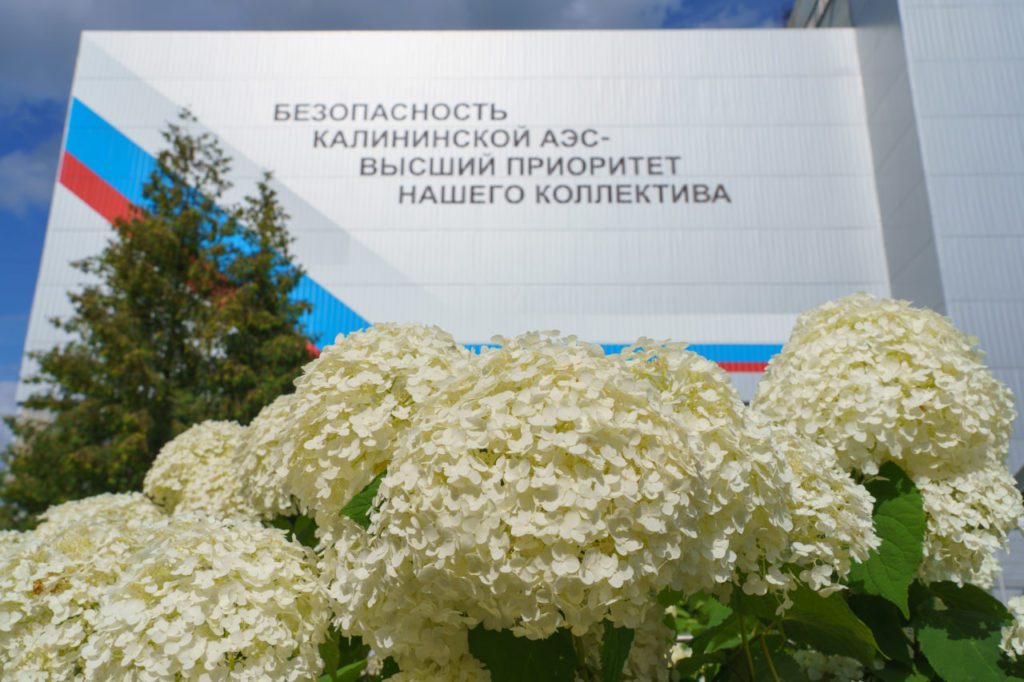
The safety of the technological process is monitored by radiation control teams of specialists and sensors located along the entire perimeter of the station, including on the cooling towers and energy unit hulls. Within a radius of 30 km around the station, 18 monitoring stations of the automated radiation monitoring system monitor gamma radiation. Filters and various waste treatment stages operate in accordance with Russian regulations, as well as IAEA guidelines.
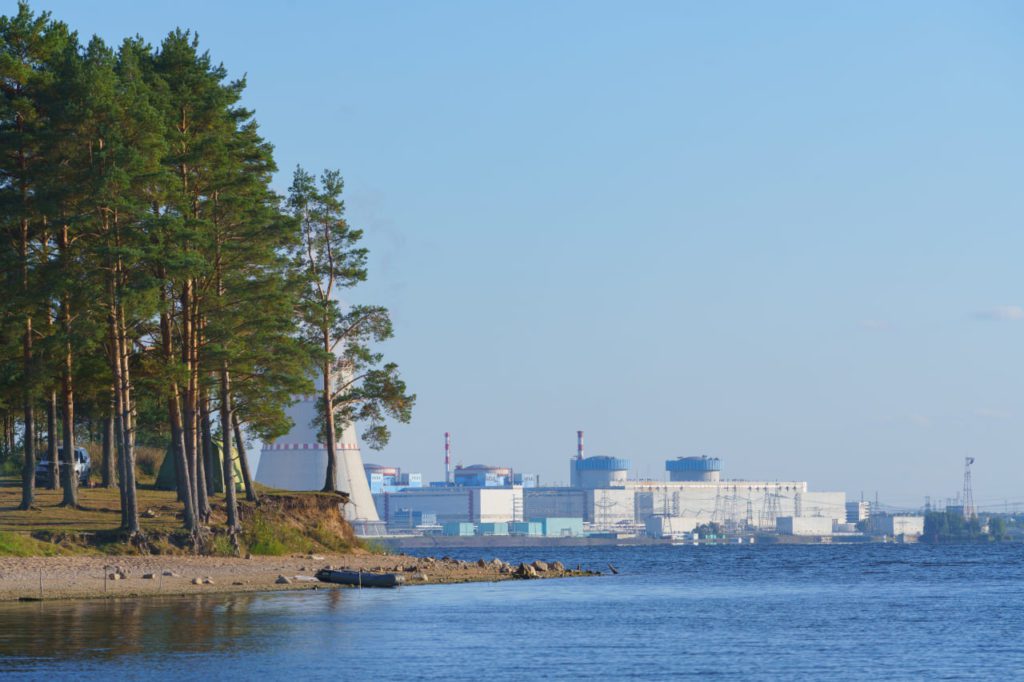
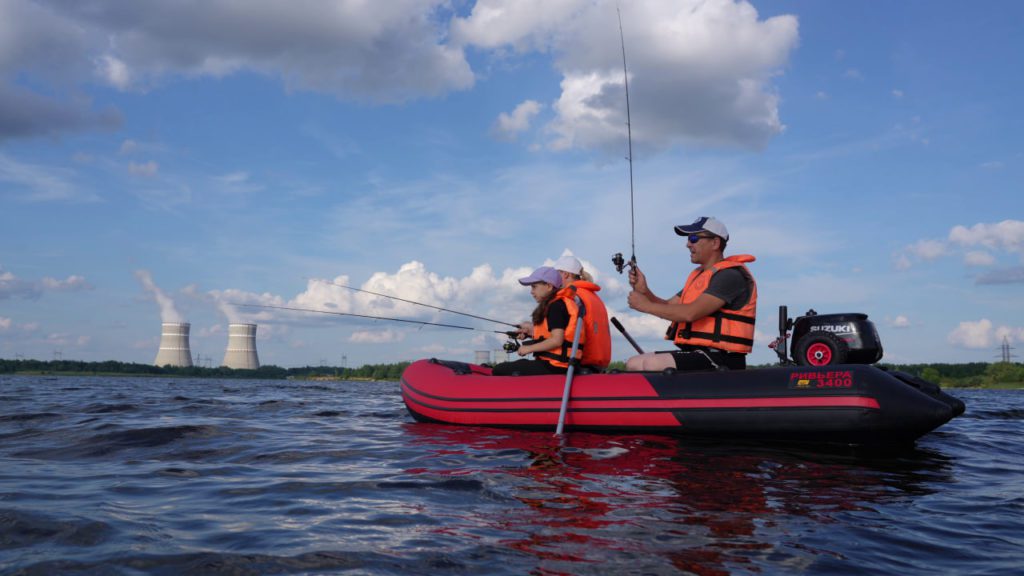
However, not only the technical indicators indicate the cleanliness and safety of the station’s surroundings, but also the abundance of wild animals, birds, and fish that live in harmony with their “nuclear” neighbor. In the lakes used for the station’s direct operation, local residents are not afraid to swim and catch fish, many species of which are found in the water opposite the NPP.
A demonstrative measurement of gamma radiation was carried out at a kilometer from the station on the lake shore — the indicators on land and at the water level did not exceed the permissible norm. In response to journalists’ questions, a mobile team specialist said that no excess was ever detected in any indicators.
For its work in the field of environmental protection in 2020, the Kalinin Nuclear Power Plant received the diploma of the winner of the XVI All-Russian Competition “Leader of Environmental Activities in Russia” in the nomination “Best Environmentally Responsible Enterprise in the Field of Atomic Energy”.
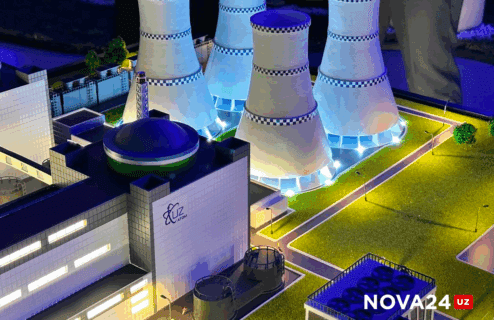
In Uzbekistan, there are no lakes suitable for use in the NPP cycle. There has also not yet been a final decision on the cooling system. Most likely, these will be dry cooling towers, which imply the absence of water evaporation during the reactor cooling process, about which negotiations were held between Rosatom and Uzbekistan. However, despite the cooling system, it is already clear that even the presence of a large nuclear power plant does not harm the environment.
Support for IT development
One of the largest data processing centers in Russia, with a capacity of 48 MW, is located directly near the Kalinin Nuclear Power Plant. The Center provides services to hundreds of clients, guaranteeing the safety and uninterrupted operation of data provided by the NPP’s power supply.
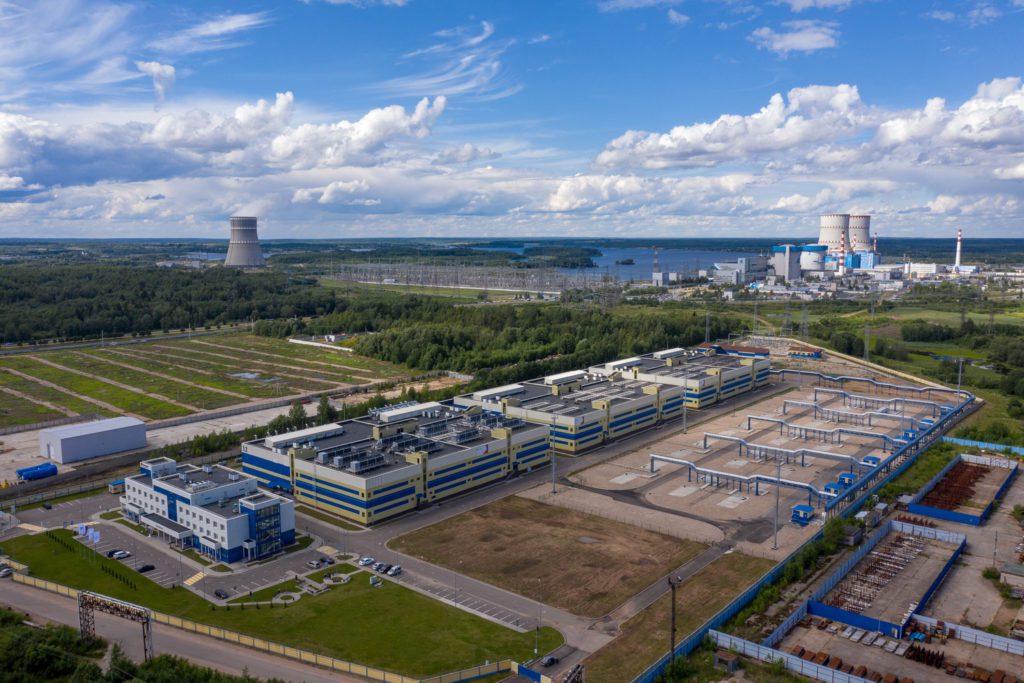
The internal structure of enhanced security is represented by a reinforced structure, thanks to which corridors with parking spaces for servers and databases are located in a peculiar “building within the building”.
Such IT solutions, reinforced by the uninterrupted operation of nuclear power plants, can be implemented in Uzbekistan, which has been ambitiously striving to develop the sector in recent years. In accordance with the Strategy for the Development of AI Technologies until 2030, the country plans to launch high-performance computing servers and increase the number of scientific laboratories operating in the field of AI to 10 units. The emergence of a powerful and, most importantly, uninterrupted power source could mark a new milestone in the development of the IT sector in Uzbekistan.
Малая АЭС и реактор РИТМ-200Н
The first LPNPP in Uzbekistan will be presented on the basis of the RITM-200N reactor — a Russian-developed vessel reactor adapted for icebreakers and floating nuclear power plants, for land use. The LPNPP will have a total of two RITM-200N reactors with a capacity of 55 MW each. A distinctive feature of the project will be its compactness: a relatively small reactor can accommodate all the necessary equipment, which will also affect the economic component.
In June, the forging of the reactor workpiece began in St. Petersburg. At the “AEM-Specstal” plant, workpieces will be made for all reactor installations of the first low-power nuclear power plant being built in Uzbekistan according to the Russian project. The final assembly of the RITM-200N reactors will take place at the “Zio-Podolsk” plant, which is part of the Rosatom Machine-Building Division.
The acting director of the design office of the LPNPP of the Rosatom Machine-Building Division, Vitaliy Pakermanov, dispelled skepticism about the RITM-200N, saying that the device was used on icebreakers, and now it will be presented for ground use. The specialist emphasized that the reactor’s modification was carried out according to strict regulations of supervisory bodies, while RITM-200 itself proved itself in the best way, working more than 400 reactor-hours in harsh conditions of icebreaker service. At the same time, some ships are equipped with two RITMs-200, which experience and withstand overloads when the icebreaker collides with ice.
When can we expect peaceful atom energy in Uzbekistan?
Uzbekistan will begin pouring the first concrete at the LPNPP in Jizzakh region in 2026. The first unit of the station is planned to be commissioned by the end of 2029. The design and survey work has already been completed, and the pouring of concrete marks a new stage – the transition to the active phase of project implementation.
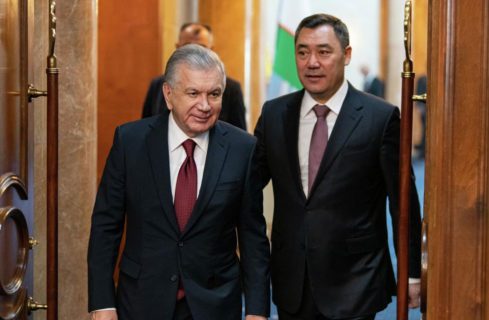
As reported by the head of Uzatom Azim Akhmedkhajaev, Shavkat Mirziyoyev instructed to accelerate the deadlines, while the head of state is closely monitoring the process: every two weeks, the president receives a report on the progress of the work and the results achieved.
The President of Uzbekistan noted that the republic is one of the first in the world to build an atomic power plant, stating that the introduction of advanced nuclear energy technologies will give an additional impetus to the country’s development, the creation of new scientific and technical developments, and the transition to an innovative economy.
Read also: The forging of Uzbekistan’s first nuclear reactor has begun — report. NOVA24.uz provides all the details of the future nuclear power plant project, including safety and water scarcity issues.