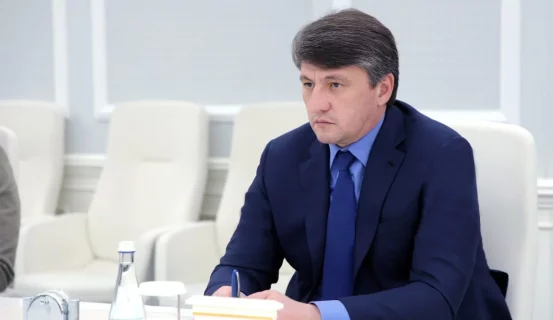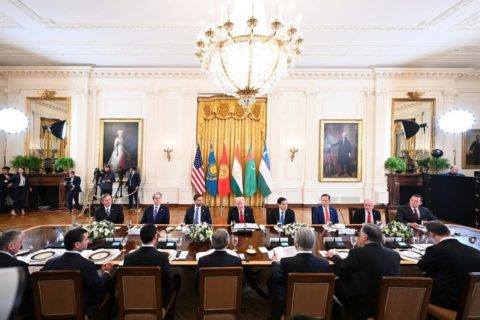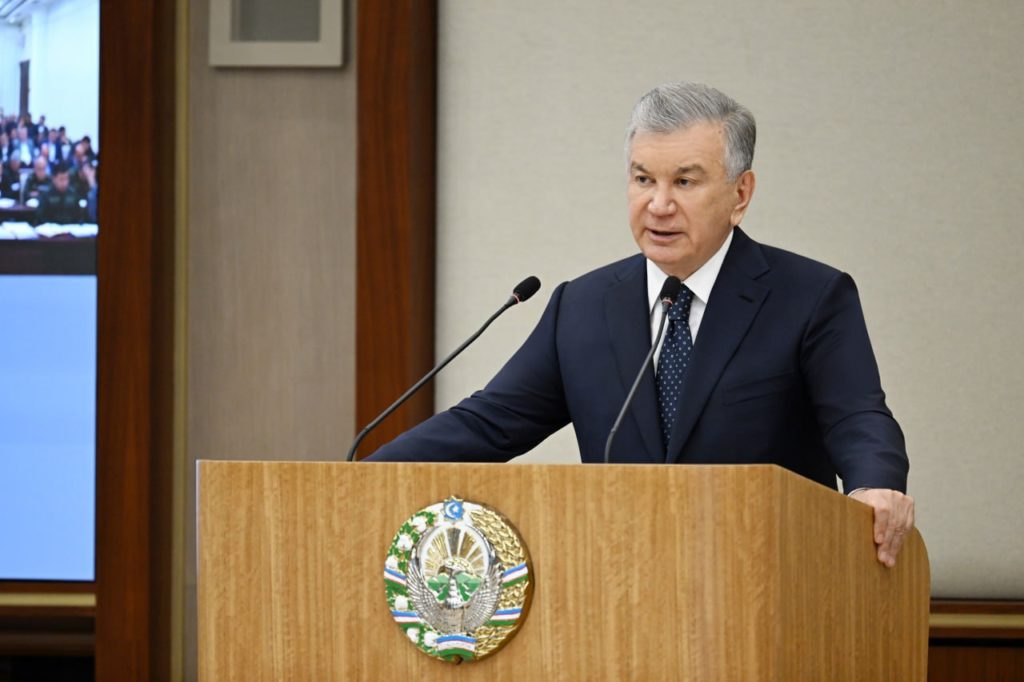
Under the chairmanship of Shavkat Mirziyoyev, an expanded meeting was held on the expected results of economic development in the current year and the main macroeconomic indicators for 2026, the presidential press service reports.
During the discussion, it was noted that during the period from January to September 2025, the country’s economy grew by 7.6%, significantly exceeding projected indicators. The volume of industrial production also increased by 6.8%, construction work — by 14.2%, services — by 14%, agriculture — by 4.1%.

It was emphasized that gold and foreign exchange reserves increased by 35% compared to 2024 and reached $55 billion. Experts cited the opinions of reputable international rating agencies that highly value the economic prospects of our country. Thus, Fitch Ratings agency raised Uzbekistan’s sovereign rating by one step for the first time, while Moody’s and S&P Global changed expectations from “stable” to “positive”.
It was noted that household incomes increased by 18.4%. At the same time, the volume of deposits increased by 35.3%, and average wages — by 19.2%. According to surveys, confidence is growing among the population and businesses, and opportunities for employment and increased income are expanding. The President emphasized that maintaining high growth rates until the end of 2025 and bringing GDP to more than $135 billion is one of the main tasks of the economic complex.
At the meeting, held in a critical spirit, the main plans for 2026 were reviewed. The responsible officials reported that in 2026, it is planned to ensure the growth rate of the economy at 6.6%, bring the volume of GDP to more than $150 billion, as well as allocate at least 400 trillion soums to the economy from all sources and maintain the inflation rate at no higher than 7%.
The country’s leader noted that all the necessary opportunities and conditions exist for achieving these goals, outlining important issues requiring increased attention from the heads of ministries, industries, and regions. The draft budget for 2026 provides for the preservation of current tax rates. It was emphasized that under such conditions, it is necessary to consistently increase budget revenues and establish strict control over the effective spending of budget funds.
As the head of state noted, in 2025, reducing costs and increasing efficiency will become the main criterion for managers at all levels. In this regard, the authorities were instructed to reduce costs and increase competitiveness in strategic sectors, expand private sector participation, and streamline the dividend policy of state-owned enterprises.
Tasks were also set to analyze the effectiveness of subsidies and benefits, eliminating ineffective ones, reducing the share of the shadow economy, and increasing the revenue base of district and city budgets. It was noted that it is necessary to accelerate the implementation of projects with the participation of funds from international financial institutions and to transition to a system where new projects are financed only after the completion of existing ones.
The President instructed to allocate half of the balance of extra-budgetary funds of ministries and agencies to a special fund and use these funds for the construction of schools and the development of healthcare. Following the meeting, the authorities identified the main directions of the draft State Budget for 2026.