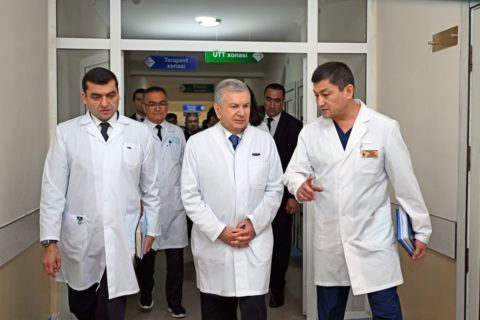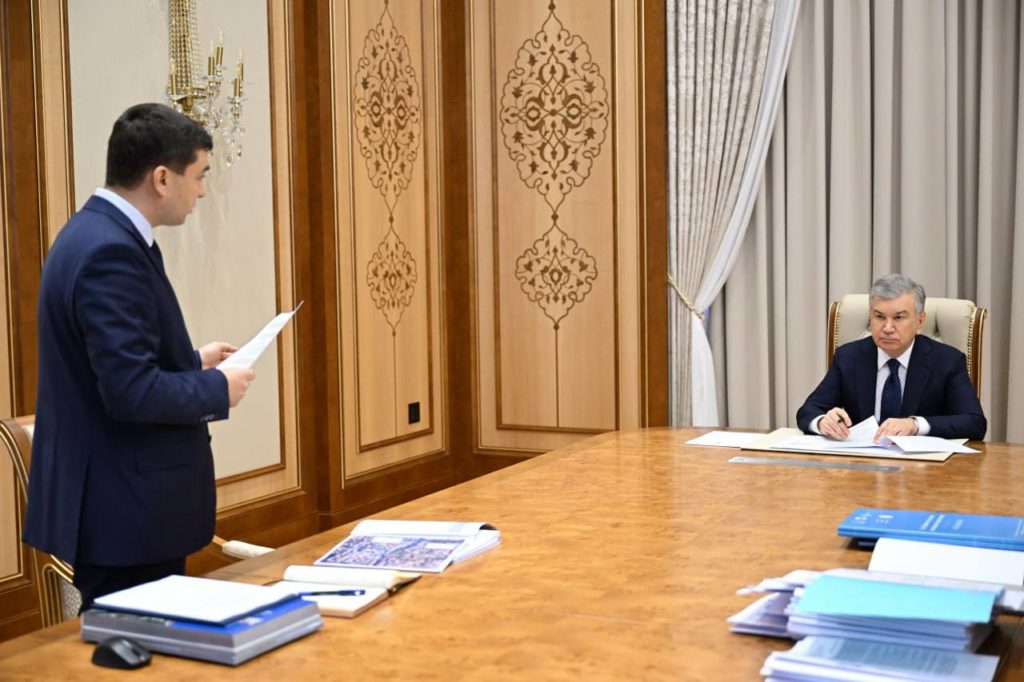
On December 15, President Shavkat Mirziyoyev was briefed on the ongoing work in the water management sector to increase energy efficiency, develop research potential, and strengthen international cooperation.
For instance, in the Republic of Karakalpakstan, there are 274 pumping stations that irrigate over 185 thousand hectares of land. Over half of the pumping units at these stations consist of equipment manufactured after 1979, and their energy consumption is 2-3 times higher than that of modern pumps.
Following the replacement of one of the outdated units in Kegeyli district with modern, energy-efficient equipment, electricity consumption was reduced by half.
Based on this positive experience, a phased replacement of 276 pumps in Karakalpakstan with modern, energy-efficient units is planned. This is expected to result in annual savings of electricity, equivalent to 25 billion soums, with a project payback period of 14 months.
The importance of supporting local manufacturers in this process was emphasized. Additionally, information on the achievements and future plans of the Tashkent Institute of Irrigation was also presented. It was noted that today the university enrolls 8,682 students and employs 571 faculty members, with a research potential of 73,5 percent.
The university has achieved high results in international rankings, placing 501st among world universities in the “THE World University Rankings 2026”, second in Central Asia and the Caucasus, and 1st in Uzbekistan, it also rose to 469th place in the “QS World University Rankings 2026”.
В прошлом году на территории университета был построен современный IT-центр на 200 мест, запущена цифровая библиотека и офис регистратора. Университет прошел международную аккредитацию на пятилетний срок. В учебный процесс привлечены соотечественники, закончившие университеты из мирового топ-300, а также иностранные профессора.
In the future, it’s planned to create a national platform based on digital technologies for climate change analysis, build space observation stations on the university campus, and develop infrastructure for receiving satellite data.
Furthermore, the university will launch a master’s program “Water Diplomacy,” with plans to give this specialization international status. The Head of our state instructed to develop concrete measures to position the Tashkent Institute of Irrigation among the world’s top 300 universities.
During the presentation special attention was to the matters of international cooperation. It was noted that in recent months, Tashkent hosted the first Central Asian conference on drinking water supply and sanitation services, as well as an international conference on the occasion of the Water Code’s entry into force.
It was noted that as a logical continuation of these initiatives, the Tashkent International Water Week is scheduled to be held in March of next year. The forum will serve as a platform for strengthening cooperation with international institutions and countries in the region, dialogue on the rational use of water resources, and the implementation of “green” technologies.
Instructions were given to ensure high-level organization of the event and to thoroughly prepare for an international forum dedicated to water-saving technologies in the Aral Sea region, which will also take place next year.
Earlier, it was reported that the Water Code would be approved in Uzbekistan. It is also planned to transfer the lands of the water fund to the Ministry of Water Resources.