The reason for the change in the color of the hot water was explained to Tashkent residents
Veolia Energy announced that clean water will always flow from the faucets of the capital's residents.
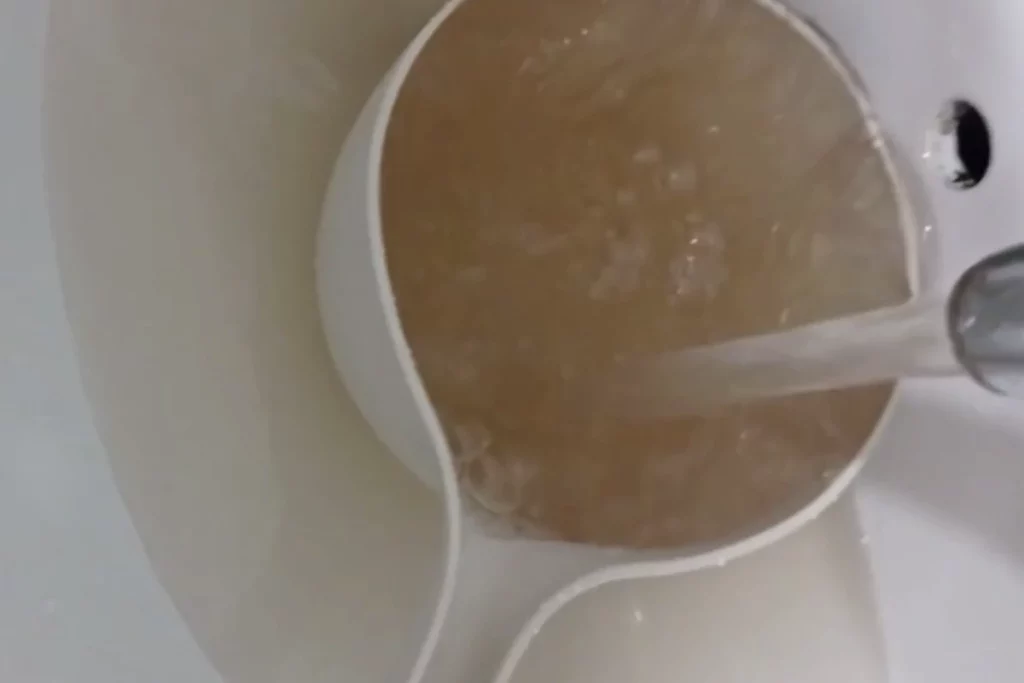
Veolia Energy Tashkent has commented on reports circulating on social media regarding changes in the color of hot water in some areas of the capital.
According to the information, a brownish or rusty color may appear on the water before the start of the heating season, when the heating networks are switched to a preparatory mode and the water begins to gradually circulate through the pipelines.
This is necessary to check the system and ensure uniform heating of the network before supplying heat, during which water movement begins through main pipelines, — the company noted.
In the interheating season (spring-summer-autumn), when the heating system is not activated, the capital’s heating networks operate in summer mode. During this period, hot water is supplied through one of the two main pipes, and planned maintenance work is carried out on the second line as part of the preparation for the heating season. During such work, individual sections of pipelines are temporarily freed from water, and after repair, the system is filled with network water to check its tightness.
During downtime, especially at high temperatures and limited fluid flow, the water naturally interacts with the inner walls of metal pipes. A thin layer of rust forms on their surface, which, upon further circulation, is partially washed away and gives the water a brownish tint. This phenomenon is temporary and disappears several days after the stabilization of the system parameters, — the company noted.
The company also discovered that in some houses, hot water was supplied through the return pipeline, which does not participate in circulation in summer. Such a connection leads to a decrease in the temperature of the hot water, water stagnation, and a change in its color. The company’s personnel, together with representatives of management organizations, are adjusting the heating unit circuits and technologically draining the water before it becomes clear.
Residents affected by the change in water color were asked to contact the company’s call center at 1347 or 71 200 00 56 on weekdays and its district offices on weekends. If the influence of external networks on water quality is confirmed, the issue of recalculating the fee (based on acts) will be considered.
The company assured that the problem of water color change should disappear after the transition to a closed heat supply system is completed. Within the framework of the project being implemented by the company, old metal pipes are being replaced with modern ones, and individual heating points (ITPs) will be installed in residential buildings.
In the closed system, hot water is heated inside the building through the hot water supply network (HTP), not directly from the network. This prevents network water from entering the faucets, maintains circulation year-round, and eliminates the risk of rust appearing in the water.























Comments