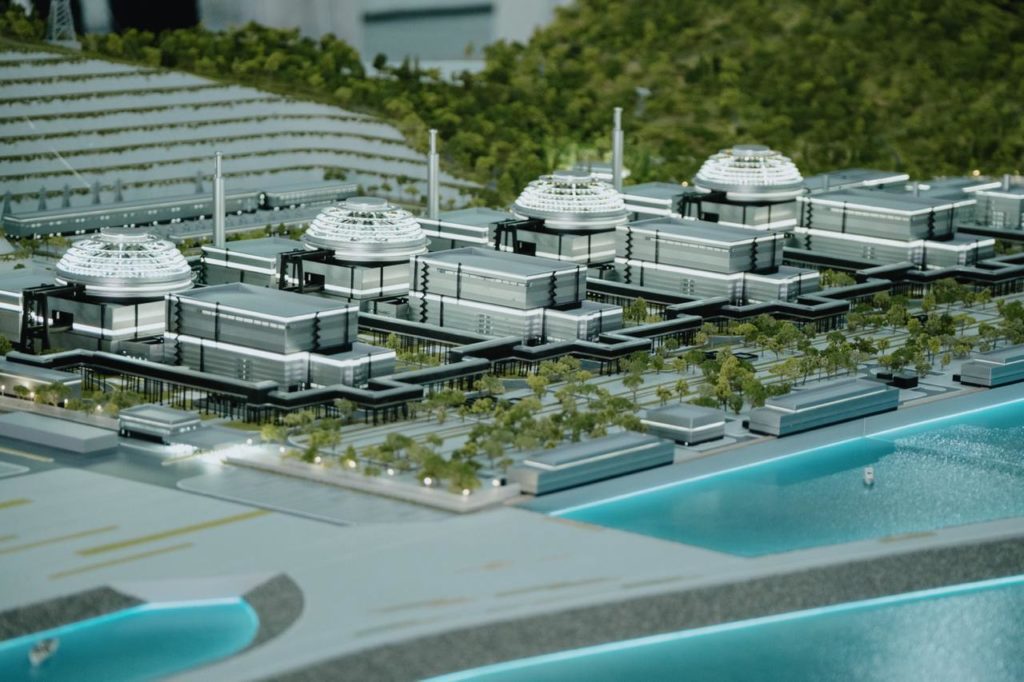
In October, an international fishing tournament was held near the Akkuyu Nuclear Power Plant under construction in Turkey, on the shores of the Mediterranean Sea. The event not only became a sporting event, but also drew attention to the important question: how does society perceive atomic energy and can it be an ally of nature?
Among the tournament participants were fishermen from seven countries, including the Uzbekistan team, which won in the “Biggest Fish” nomination.

One of the outcomes of the tournament was not a hunt, but an open conversation about ecology and responsibility in the context of the role of nuclear power plants in the region with one of Turkey’s leading environmentalists, Professor Dr. Ahmet Demirak, Director of the Center for Research and Practice on Environmental Problems at Muğla Sıtkı Koçman University (The Environmental Problems Research and Application Center, Muğla Sıtkı Koçman University).
Professor Ahmet Demirak believes that the fishery tournament in the water near the future nuclear power plant has become a symbol of a new culture of openness and trust.
I consider this competition a manifestation of public openness, demonstrating confidence in the safety of the station and the health of the local marine ecosystem. Nuclear power plants have strict safety protocols and a measurable monitoring system for the state of marine fauna, — professor Demirak believes.
According to him, such initiatives are important not only in terms of communication, but also as a reflection of the maturity of society. In the Mersin area where the station is being built, many residents traditionally earn their living by fishing and tourism, so their trust in the project is of particular importance.
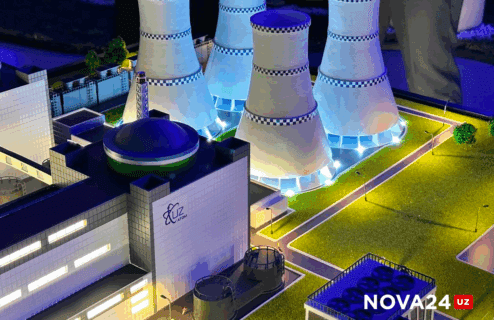
The Akkuyu Nuclear Power Plant is Turkey’s first nuclear facility, being built with the participation of the Rosatom State Corporation in Mersin province, on the Mediterranean Sea coast. After commissioning, four power units with a total capacity of 4800 MW will provide up to 10% of the country’s electricity needs. However, the country is preparing to increase nuclear power by building new nuclear power plants.
For Professor Demirak, the Akkuyu Nuclear Power Plant is not only an energy project, but also a climate project.
The Mediterranean region, where the Akkuyu Nuclear Power Plant is located, is one of the most affected by global warming. I believe that carbon-free energy production at the station will reduce the burden on the Mediterranean Sea’s living environment, indirectly increase the resilience of marine ecosystems to overheating and oxidation, and also help preserve the region’s limited freshwater reserves, — explains the expert.
He notes that the construction of the power plant has already brought tangible socio-economic benefits: the region is actively developing, thousands of jobs are being created, infrastructure and the standard of living of the population are growing.
Professor Demirak is confident that Turkey’s experience can be useful for countries just beginning to develop nuclear energy, including Uzbekistan.
The Akkuyu project serves as a model. First of all, this is an element of the national strategy in the field of environmental policy and combating climate change. Turkey’s experience offers valuable solutions in three areas: building-owner-operate model, forming national regulatory infrastructure, and conducting environmental expertise in the construction region, — explains the scientist.
He emphasizes that sustainable development is impossible without scientifically sound solutions and transparent control mechanisms.
The most important factor is the creation of a regulatory body with legal authority, technical competence, and financial independence, capable of ensuring compliance with safety standards and environmental standards without political or commercial interference. Environmental monitoring programs covering air, water, soil, and biota should be conducted with full transparency. Local communities, scientists, and non-governmental organizations should be included in the monitoring processes as active stakeholders and full participants, — says the professor.
Comparing the challenges of the climate crisis with the COVID-19 pandemic, Professor Demirak emphasizes that in both cases, the price of procrastination is too high.
In reality, the principle in both cases is the same: if you wait for the consequences to become apparent, it will be too late to stop them. The climatic consequences can manifest themselves over decades, while the coronavirus spreads in a matter of days. However, the world should approach both problems from the same point of view, — says the expert.
For the countries of the region, according to him, the choice is obvious: either the development of climate-friendly energy or the path to climate disasters.
Turkey’s new vision for nuclear and renewable energy serves as a benchmark for other countries. I believe that maximizing the use of renewable energy sources in conjunction with the application of nuclear technologies represents an important model, — professor Demirak concludes.
The tournament at the Akkuyu Nuclear Power Plant has become a symbol of this new approach, when energy and ecology cease to be antagonists and become elements of a single sustainable development system. For participants from Uzbekistan, this event was not just a competition, but an opportunity to see how environmental responsibility and innovative technologies can coexist in reality.