What is convection — expert’s answer
An environmental committee specialist explained how the phenomenon affects air quality.
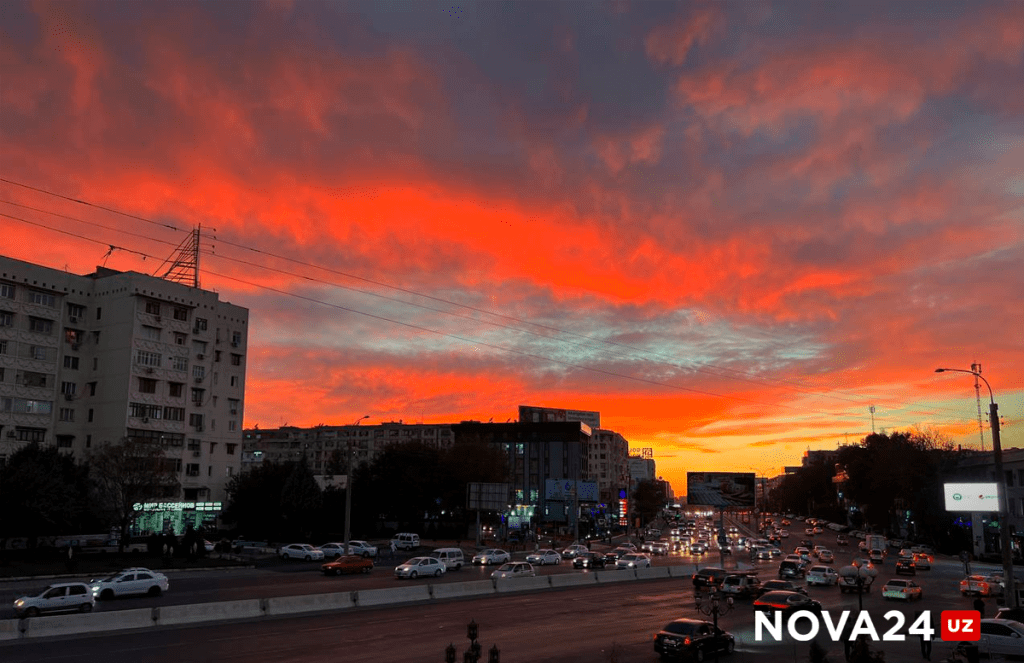
Nozim Nosirov, an employee of the National Committee for Ecology and Climate Change, explained what convection is.
According to information, convection is the process of heat and substance transfer in a liquid or gas that occurs as a result of the mixing of flows. At the same time, warm layers (with lower density) rise upward, natural circulation occurs, which carries heat, while cold layers (with higher density) descend downward.
Convection can be observed in a water container when the water is heated from the bottom, the warm part rises up, the cold part descends down, as a result of which the entire volume of water heats up, in the atmosphere, when heating the room, radiators heat the air, the warm air rises up, the cold air descends down, as well as in oceans and seas.
Atmospheric convection is a process where warm air rises upward and its place in the lower part is occupied by cooler air. With strong convection, the air is actively mixed vertically, pollutants are dispersed, and the air is purified.
With strong convection — the earth’s surface heats up, intensive convective flows occur, pollutants and particles rise upward, disperse, and their concentration near the surface decreases. As a result, the air becomes cleaner.
With weak convection — the ground surface cools, warm air does not rise, convection weakens, and pollution accumulates in the ground layer. As a result, air pollution occurs.
Read also: What is temperature inversion — expert’s answer. The specialist also described the process of the emergence of PM2.5 pollutant concentrations within a day.




















Comments