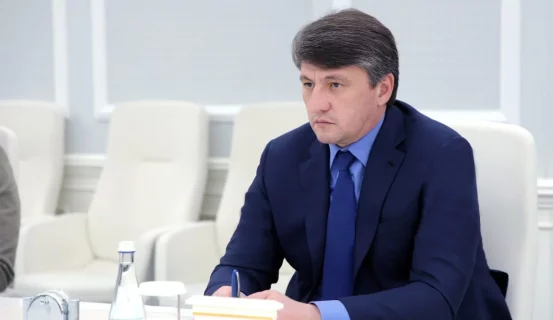
A conference titled “Ensuring the Legal Protection of Victims of Pressure and Violence” was held in Tashkent on September 12th, organized by the Supreme Court in conjunction with the National Social Protection Agency, according to the Supreme Court’s press service.
Presidential Advisor on Social Protection, Director of the National Agency Mahmud Olloyorov, Supreme Court Chairman Bahodir Islamov, Prosecutor General Nigmatilla Yoldoshev, and Deputy Prime Minister and Head of the Committee on Family and Women’s Affairs Zulfiya Mahkamova noted that in recent years, significant efforts have been made across the country to protect women and children from violence, safeguard their rights and interests, and create conditions for the full development of children. Special attention is given to the implementation of the requirements of the UN Conventions on the Elimination of All Forms of Discrimination against Women and the Rights of the Child.

The parties discussed the measures taken, existing problems, and further steps to prevent domestic and sexual violence.
It was noted that the system of protective orders is being improved in the country: along with issuing them for offenders, a program for the correction of behavior is being launched in cooperation with the “Inson” center. The standard for providing social services to women and children affected by violence has been approved.
Earlier, it was reported that pressure and violence against women had become more frequent in Uzbekistan. The increase in the indicator was explained by increased legal awareness and an active demand for women’s rights.
Since the beginning of 2025, the number of cases of pressure and violence against women in Uzbekistan has reached 48.3 thousand, exceeding last year’s figure by 121%. Deputy Minister of Internal Affairs Bekmurod Abdullayev explained the reason for such statistics as increasing women’s legal literacy and their active demand for rights compliance.