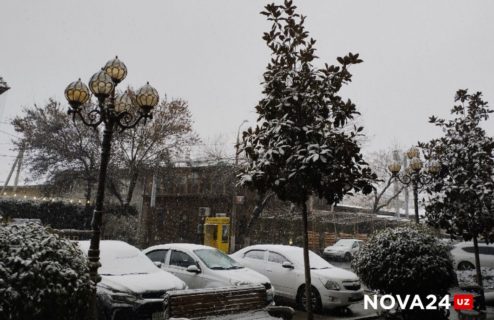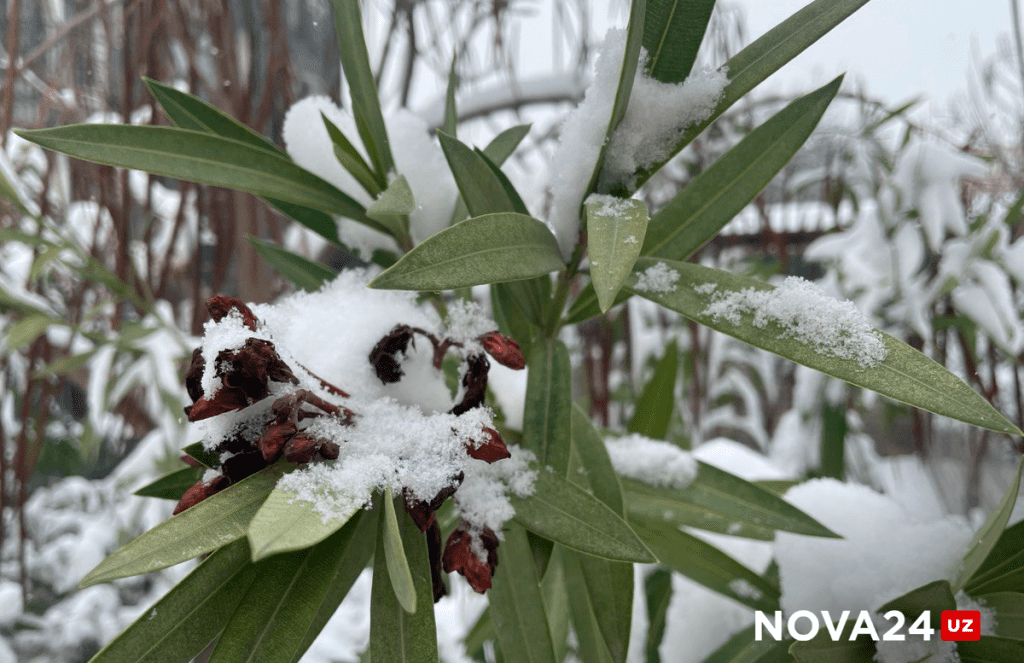
Forecasters reported that the last month of 2025 was the wettest in the last 25 years, according to the press service of the Hydrometeorological Center.
The warmest days were the first half of December and several days at the end of the month, when the air warmed up to 13-18° Celsius, and in some areas up to 19-24° Celsius. On December 15, a cold air mass entered the territory of Uzbekistan, and the temperature background across the territory of the republic dropped sharply.
During the coldest nights, the temperature dropped to 0-5° frost, in the north to 8-13° frost, and during the day did not exceed 0-2° warmth. The cold weather persisted throughout the republic for about a week. The average monthly air temperature exceeded the climatic indicators by 2-3°.
In December, the prolonged period of precipitation deficit across Uzbekistan was interrupted. The month was characterized by increased air humidity and frequent precipitation. In a number of areas of the central and southern regions of the republic, precipitation reached strong gradients: in the plains 15-25 mm per day, in the foothills and mountains up to 30-40 mm, in some places up to 50 mm per day.
Monthly precipitation in most regions amounted to 150-300% of the norm. Only in the Khorezm region, most of the Bukhara and Navoi regions, precipitation fell less and about normal. In Tashkent region, in some districts of Syrdarya, Jizzakh, and Samarkand regions, December turned out to be the wettest in the last 25 years.
Precipitation in December fell both as rain and as snow. After the snowfall in the second half of the month, short-term snow cover formed over the plains. The maximum snow height in the central regions reached 13-25 cm, in the northern and southern regions 1-6 cm.
In the mountains, the first snow cover of this season was formed at the beginning of December. At the end of the month, the snow depth was 35-85 cm. December was characterized by increased avalanche formation. Snow avalanches were repeatedly observed at the Kamchik Pass and in the Chimgan area.
In some places across the republic, wind gusts of 15-20 m/s were observed, while in the north and desert zone, wind gusts reached 22-25 m/s. The past year of 2025 proved to be warm throughout Uzbekistan. The deviation of the average annual temperature from the norm was 1-2°.
In most of the territory of the republic, the average monthly temperature in January and February was close to the long-term average values, and from March to December exceeded the climatic norm. April and May were the warmest compared to the norm, with an average monthly temperature of 2.5-4.5°C above the long-term average values.
2025 turned out to be one of the warmest years in the entire history of meteorological observations in Uzbekistan, and in a number of regions and Tashkent, it took first place in the ranking of warmest years. 2025 was a very dry year. In most regions of the republic, the annual precipitation amounted to 50-80% of the norm.
Only in the northwestern regions and the extreme south of the republic, the sum of precipitation for the year was close to the climatic norm. In most of the territory, the months from April to November were dry and extremely dry. And the most precipitation last year was in December.