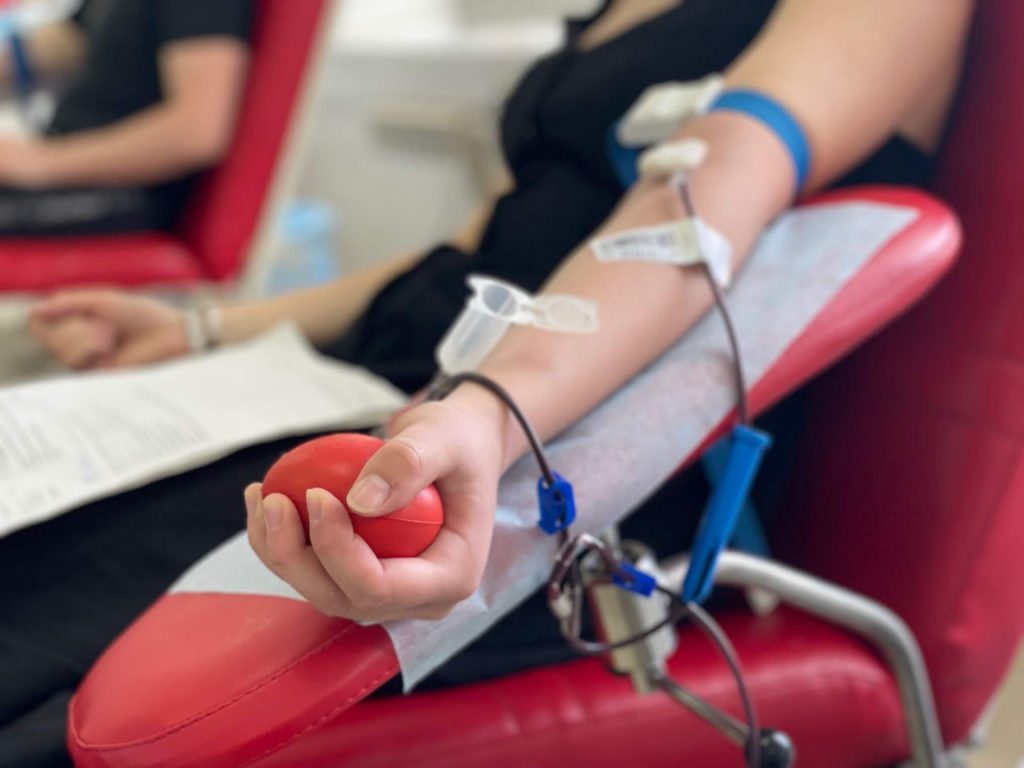
In Uzbekistan, attention was paid to the development of the free donation movement, improving the activities of specialized institutions, and strengthening their material and technical base, the press service of the Ministry of Health reports.
Currently, the Republican Blood Transfusion Center, the Tashkent “Blood Products” Scientific and Production Enterprise, 13 territorial and 2 republican blood transfusion stations, and 13 blood transfusion departments are working effectively in this direction.
The main goal is to provide medical institutions with necessary medications and blood components, as well as to cultivate a culture of donation in society.
According to WHO recommendations, to fully meet the population’s needs for components and blood products, there should be at least 30 donors per 1,000 people. We have this figure of 10 people. If it is increased to 30, it will be possible to provide 100% of the need,” said A’lonur Saidov, Director of the Republican Blood Transfusion Center.
The country produced 130.6 tons of quality blood in 2023, 148 tons in 2024, and 153 tons in 2025. To increase indicators, 13 mobile donation complexes – specially equipped “Isuzu” buses of the Republican Blood Transfusion Center – were transferred to blood service institutions in the regions.
They are equipped with special couches, refrigerators, blood containers, bactericidal air purification lamps, air conditioners, and lighting fixtures. At the same time, blood can be taken from three donors.
In the country, any person between the ages of 18 and 60, with a body weight of more than 50 kg and a hemoglobin level not lower than 128 for men and 120 for women, can become a donor. Every person can donate blood up to 4 times a year. The maximum volume of one delivery is 450 ml.
Today, free donors in the country have a number of rights, privileges, and guarantees, and the relevant legislation has been further improved. Thus, the amount of a one-time monetary reward for persons awarded the “Honorary Donor of the Republic of Uzbekistan” badge has been increased to 15 BRV. Previously, it was 5 BRV,” the report says.
In addition, honorary donors have the right to take annual leave at their convenient time, to use city passenger transport free of charge (except for route and non-route taxis), and to receive vouchers for sanatorium-resort treatment out of turn.
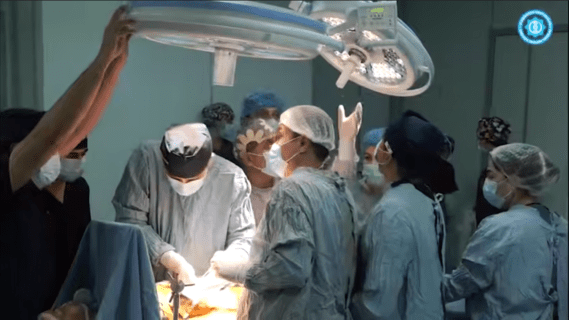
As a reminder, the first liver transplantation was successfully performed in Bukhara. The complex operation lasted about ten hours.