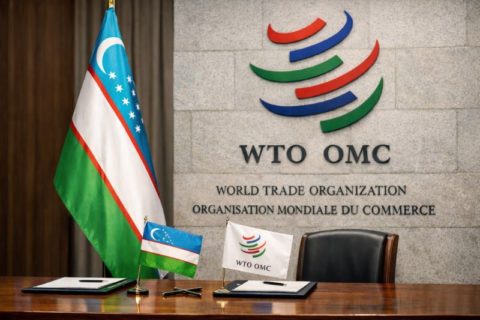
In Uzbekistan, they plan to analyse car prices from local manufacturers, official and unofficial dealers. Based on the research results, they aim to develop proposals for their optimisation and regulation, “Gazeta.uz” reports, citing the minutes of the meeting of the Interdepartmental Commission on Working with the WTO.
According to the information, the issue of simplifying procedures for assessing the conformity of vehicles imported by individuals and legal entities for personal use was on the agenda.

According to the report of the Technical Regulation Agency, the conformity assessment of vehicles is now based on the technical regulations approved by the Resolution of the Cabinet of Ministers No. 237 dated 25 April 2017. It specifies 62 indicators that require vehicle type approval. However, only 25 of these can be tested in Uzbekistan, while the rest are recognised through protocols of the 1958 Geneva Agreement.
From 1 January 2023, the requirement to sell new imported cars solely through official dealerships was removed. This allowed the reduction of evaluation indicators from 62 to 14 for importing cars for personal use. From 1 November 2024, vehicles will need to pass mandatory certification across 14 points, regardless of type approval. It is not disclosed which document authorised this procedure.
The practice described above applies to vehicles imported by individuals and private entrepreneurs who are not official dealers. They were required to obtain a conclusion on two types of testing at an autopilot in Pskent: for electromagnetic compatibility and the level of toxic substances in the cabin.
To speed up the procedures, an electronic queue and 24/7 laboratory operation have been put in place. As a result, the landfill’s capacity could not handle the flow, causing long queues for several months. Later, during a meeting with entrepreneurs, the chairman of the Chamber of Commerce and Industry, Davron Vahabov, stated that this procedure was introduced to protect local car manufacturers.
The tests were conducted by the agency’s subsidiary company — the Uzbek Center for Research and Quality Control state institution, the same UzTest, which raised concerns about conflicts of interest.
The protocol reports that, as a result, the number of official dealers grew from 3 in 2020 to 21, and the number of transport type approval (TTS) models increased from 15 to 101.
Despite the measures implemented, there has been no significant rise in sales through official dealerships. In the first half of 2025, private individuals imported 2,693 more passenger cars than in the same period last year.
One of the reasons cited was the overload of testing infrastructure: in Pskent, queues reach three months, which causes discontent among citizens. In January to March 2025, car imports decreased by 69% compared to the same period in 2024 – from 22,186 to 6,888 units. The value of deliveries decreased by 4.2 times – from $488 million to $115.1 million. In the first half of this year, car imports fell by 33.4% in terms of units – from 36,451 to 24,264 units, and by 43% in terms of value.
Following the discussion, the Interdepartmental Commission made several decisions. From 2 September, the requirement to conduct mandatory tests for two indicators (electromagnetic compatibility and the level of toxic substances in the car interior) for each car imported for personal use has been withdrawn. With the emergence of new dealerships, testing cars at Pskent Autopolis has become unnecessary.
Furthermore, the validity period of the vehicle type approval for legal entities is being extended from three to five years. “Uzstandard” was instructed to develop and submit a proposal by 1 October to attract private individuals to establish conformity assessment centres and enhance the accreditation system. Within the same timeframe, a draft normative legal act concerning amendments to the technical regulation will be submitted.
The Consumer Rights Protection Committee and the Ministry of Economy were instructed to analyse the price differences for cars at local manufacturers, official and unofficial dealers, and then submit proposals for their optimisation and regulation to the Presidential Administration. The agency was also tasked with strengthening the quality control of imported cars and responding to consumer complaints.